Different feelings of suicide and their meanings
Danielle Shaw – Suicidologist / Lived experience
Please note if you are struggling, please reach out. SAP;UK have an everyday support line, alternatively reach out via The Hub of Hope where there are many different avenues of support for you to find.
In suicidology there are many terms that reference the different behaviours and actions that one can be accompanied with when enduring a suicidal crisis. There are many different means and / or causes that can facture one with suicidal intent.
Understanding what each term means can support recovery, both for someone experiencing suicidal thoughts and for those supporting them. By clarifying how these experiences differ and how they may affect a person’s thoughts and wellbeing.
Every year, more than 720,000 people die by suicide in the world an alarming number and it is one of the lead causes of death for individuals under the age of 35.
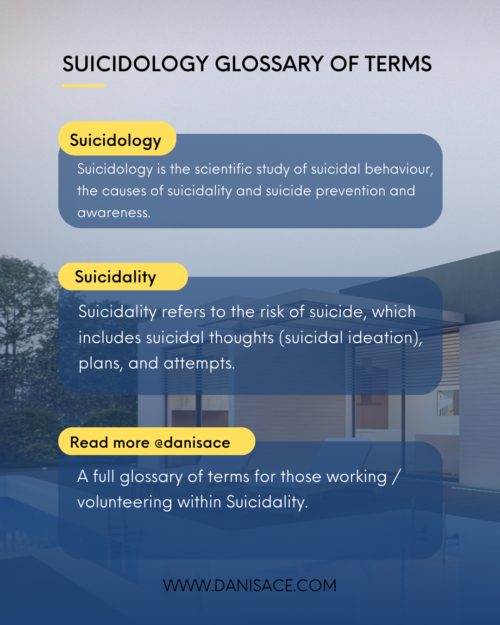
Suicidology
Suicidology is the scientific study of suicidal behaviour, the causes of suicidality and suicide prevention and awareness. Suicidology means to study and research individual causes and effects that suicide may cause. There are various research methods that can be utilised when researching Suicidality. Including qualitative research methods such as interviews and observations, and quantitative methods such as surveys and experiments. Systematic reviews are also extremely worthy of producing in Suicidology. Each method of research has its own strengths and weaknesses, allowing researchers to choose the best approach based on their ethics, specific questions and objectives.
Suicidal Crisis
When one cannot escape the thoughts or feelings that suicide bring forward. An individual may dread waking up. They may not be able to sleep at night due to the hounding thoughts. There is no end to it. Just please, do not act on it.
Psychological Pain (Psychache)
Psychache is an intense internal emotional pain (e.g., shame, guilt, hopelessness, C-PTSD, loss) that individuals struggle to process effectively and healthily. This is considered a key driver in all deaths by suicide.
Suicide Attempt
Attempted suicide, or non-fatal suicidal behaviour that amounts to self-injury with at least some desire to end one’s life that does not result in death. Individuals may also engage in risky behaviours that are seen as an attempt on one’s life.
Self-harm
When an individual harms their mind or body in ways that cause harm. This can be short-term / long-term physical / mental damage. This can be by causing abrasions, cuts or hurting ourselves with objects. It can also be classed as not-eating or picking our skin.
Non-Suicidal Self-Injury (NSSI)
Self-harm behaviours without intent to die. Helps distinguish between coping behaviours and suicidal behaviours.
Suicide Intent
Suicidal intent refers to a clear desire and plan to complete suicide. This may be accompanied by specific steps taken to prepare for suicide, such as obtaining the means to do so, writing goodbye letters, or making final arrangements. It is when an individual makes an active intent to pursue suicide.
Suicidality
Suicidality refers to the risk of suicide, which includes suicidal thoughts (suicidal ideation), plans, and attempts. It encompasses a range of behaviours and feelings related to the desire to end one’s own life.
Suicidal Ideation
Suicidal ideation is any thought about suicide, regardless of how fleeting or persistent they may be. This can range from a casual thought such as “I don’t want to be here anymore” to more detailed fantasies or thoughts about how they may die, what life would be like for people without them, and what their legacy would be. It can split into two parts, passive suicidal ideation and active suicidal ideation.
Passive Suicidal Ideation
Passive suicidal ideation is when an individual doesn’t necessarily think about suicide, but they may have the odd thought such as, ‘I wish I didn’t wake up today’, ‘I wonder what would happen if my car crashed into a bollard’, ‘my life would be better if I lived in heaven’.
Passive suicidal ideation is typically used to describe a more general sense of dissatisfaction with one’s life that is not accompanied by any type of plan. People who have passive ideation may not necessarily be sad or distressed but sometimes the thought are there. This is more common than many of us believe.
Active Suicidal Ideation
Active suicidal ideation describes thoughts that are accompanied by specific plans. Although, it can be difficult to tell if someone has active suicidal ideation, because the warning signs can be significantly different from one person to the next. There is also not one fundamental sign that an individual is suicidal.
Active suicidal ideation refers to when an individual is actively with suicidal thoughts. Some may want to idealise suicide, it may bring them comfort in knowing that they have control. Some may not want to experience this and may become frustrated with the thoughts.
Suicidal Intrusions
Distressing, involuntary images or thoughts of suicide. These can be often vivid or repetitive. For example when an individual is just minding their business, a suicidal thought will just enter, they do not need a trigger.
Suicidal Entrapment
When an individual wants to die but feels they are stuck here. This can be due to children, family commitments, work commitments etc.
Suicidal Tendencies
Suicidal tendencies is a term that indicates the propensity of an individual to experience suicidal thoughts or attempt suicide. This is not a clinical term to use as it far from reality, nobody wants to experience suicidality, I am sure that someone who has a suicidal mind would swap at any given moment to not experience them anymore. But what this term suggests is that when one has experienced suicidal thoughts / actions for a long period of time, such as from childhood, they may have become habitual in their behaviours and created tendencies. For example, reverting to suicidal behaviours during trauma.
Suicidal Ambivalence
Coexisting with the will to live and wanting to die. Suicidal ambivalence – coexisting of the will of live and wanting to die in people with suicidal tendencies. Many say that individuals who are suicidal don’t want to die, they want to escape what they are feeling. Many individuals who are suicidal just want the peace from the thoughts; they are extremely consuming.
Perceived Suicidal Burdensomeness
When an individual believes strongly that they are a burden to other people, when in fact it is not true. They may vocally express this or they may withdraw from support because they do not feel good enough for it.
If you need any support during your journey, it is critical that you reach out.
All my Love, and thankyou for reading – Danielle x
#suicidologist #suicideprevention #suicideawareness