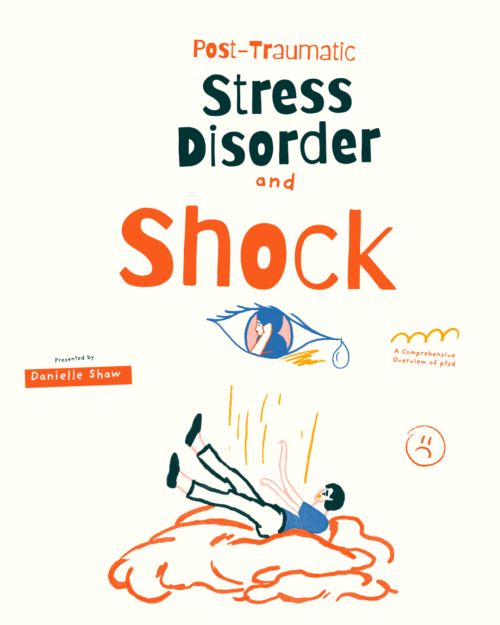
Have you ever experienced PTSD? With PTSD comes stages of processing, these include, shock, anger, sadness, acceptance, bargaining, and these can be processed in any given order, depending on the person and their capacity of processing 🫶🏽
When i experienced PTSD I later saw it as a foreign body that entered into mine, I did not know I was experiencing it until I came away from it several years later. It was extremely hard for me to process in a healthy manner.
PTSD can come to an individual after severe trauma, or in my case after several traumas. Because i had several traumas to process at once I developed chronic PTSD, please see my other blog ‘it comes in three’s’ for a more in depth understanding.
But wwhat i wanted to talk about was the shock stage that comes with the development of PTSD.
When faced with trauma many individuals have to go through several processes, one being shock.
Shock happens to an individual to delay the more severe processes such as depression and anger. It allows our bodies to pause whilst we begin to understand our mishaps.
Shock allows us to rest without going immediately into a worsened state, which would generally happen over time.
Have you ever noticed that when something really bad happens that over time you may develop depressive symptoms as appose to straight after the initial trauma? Well this is our minds way of protecting us by being gradual.
Shock is also the first initial reaction, it can come in formats like ‘I don’t believe it’, ‘that’s not true’ our mind deflects the trauma in a bid to process it. We can sometimes not believe what’s happened, for example when I found Bryan after he took his own life, I went to work the next day and carried on for the rest of the week. When I found my ex in bed with another girl I went to work and also carried on for the next week, it was only gradually over a bit of time that I actually started to process and my mental health began to decline quite rapidly.
I did not understand what my mind was processing and with no support network at the time I faltered more than I should of and became quite unwell. But due to my mishaps I now have the tools and understanding to help you.
Although I still face depressive symptoms from these traumas, generally always looking back thinking if I didn’t become so unwell maybe I could of been more than who I am today. More what is more?
I think when an individual faces trauma we have to be prepared for PTSD.
Post traumatic stress disorder has one major symptom and that’s replaying the same scenarios over and over again in a bid to either make it less traumatic, or to make it fixed, with endless mind movements of different outcomes.
It can disrupt your sleep, disrupt your personality, disrupt your relationships and so much more, please see ‘I’m just nipping out’ as this explains depression and PTSD and how they can nip in and out. You can believe you are better than PTSD comes to reduce you again, it’s extremely hard to process. It can also either be a short lived experience or it can sit with you for years, developing intk chronic and with other mental health such as depression / chronic depression.
So what can you do? I hope that unlike me you have support around you, it will soften the blow, I also hope that when you are experiencing PTSD that people are kind including yourself, I hope yous re kind to yourself. But what I need you to really do, is to accept your positioning.
Accept your trauma, accept your current mental health, and by doing this you will be able to move forward with this new version of yourself, please do not rush yourself getting better, it took me 6 years to heal from my traumas, but I would say a minimum of 6 months to EXPRESS and understand PTSD 💙💜🫶🏽
Scientifically – what happens in the brain when someone experiences PTSD?
During ptsd the brain can undergo physical and functional changes in key areas, including the amygdala, hippocampus, and prefrontal cortex. These changes lead to an overactive “alarm system” and an impaired ability to regulate emotions and memories, effectively keeping the brain in a persistent “survival mode”.
Including neuro-chemical and systematic changes we also have defects amongst our main structures during a PTSD experience.
Our Amygdala takes a hit, this area is the brains alarm state, it detects threats and triggers a fear response within us. During a PTSD experience our amygdala can become hyperactive / overly sensitive. It can respond to the most minor of cues such as a loud noise or a certain smell, which can then re-trigger the initial trauma.
Our Hippocampus which is responsible for our memory storage and retrieval or memories can be affected. It can be reduced in matter as we process traumatic events, meaning that we can become confused differentiating the past from the present. This impairment can cause memory problems, intrusive thoughts and vivid flash backs which can lead to a difficulty processing the initial event and could make current safe situations feel unsafe.
We also have our prefrontal cortex, this executive functioning controls our decision making and emotional regulation. It allows us to ‘put on the breaks’ if the fear response is triggered within the Amygdala. When faced with PTSD the PFC significantly slows down, ‘taking a back seat’ meaning that we can then have difficulty processing what’s dangerous and what is not. Many individuals during PTSD experience impulsiveness or erratic behaviours.
If you are experiencing PTSD symptoms and you are having difficulty regulating these, I need you to reach out somewhere for help with regulation. This can either be your Dr, a professional therapist or you can contact me on my email address
Danielle@suicideapuk.co.uk, I know how difficult it can be and how an individual can chnage during PTSD. I almost lost my way several times, but now I am a walking healer preaching for life. It is hard but there are people right here.
Reach out 🫶🏽💜
thankyou for reading
1 thought on “PTSD Shock”